
From email threads to structured review, 0→1 document management for a multi-department AEC firm
Arnita Consultants is a 100+ person architecture and engineering company, specializing in large-scale pharmaceutical projects. Six departments: Architecture, Civil, Mechanical, Electrical, HVAC, and Plumbing, collaborate on 6 to 10 simultaneous GMP-regulated projects where drawing accuracy is critical. One misrouted electrical drawing cost $20,000 in rework.
I came in as the sole product designer to build their first internal document management system from the ground up.
My Role
Sole Product Designer
Team
1 Product Manager, 2 Engineers, 6 Department Leads
Timeline
15 weeks (0->1 MVP)
Contributions
Problem scoping, User research, Information architecture, MVP prioritization, High-fidelity prototypes, Component library, Stakeholder alignment, Developer handoff
Problem
6 departments, one sequential review chain, and no shared way to know what was current, who had reviewed it, or whether it was approved.
Drawings moved through departments sequentially, no shared visibility into what was current, approved, or under review.
The coordination system existed, it just lived in email threads, folder names, and people's heads. And it was failing reviewers most. Uploaders sent files and moved on. Reviewers had to find them, verify their state, and decide, with no system to support any of it.
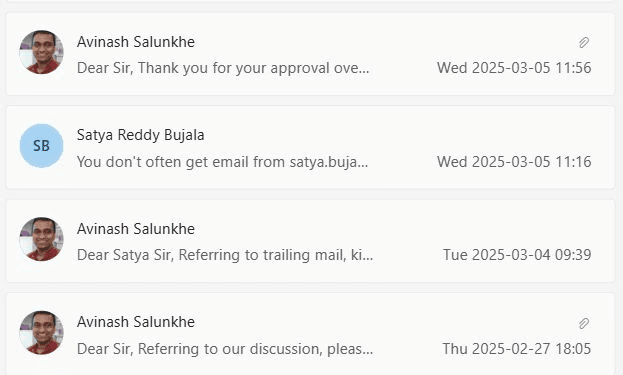
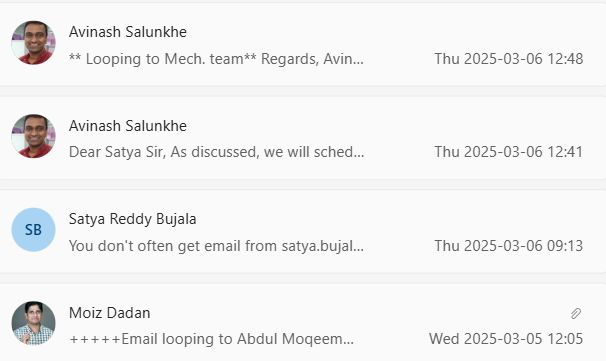
One review loop spread across multiple email threads.
5+
Email threads per review
22
Files duplicated with unclear naming
2+ hours/week
Time lost searching the correct file
3 - 4 weeks
Per review cycle across departments
Solution Highlights
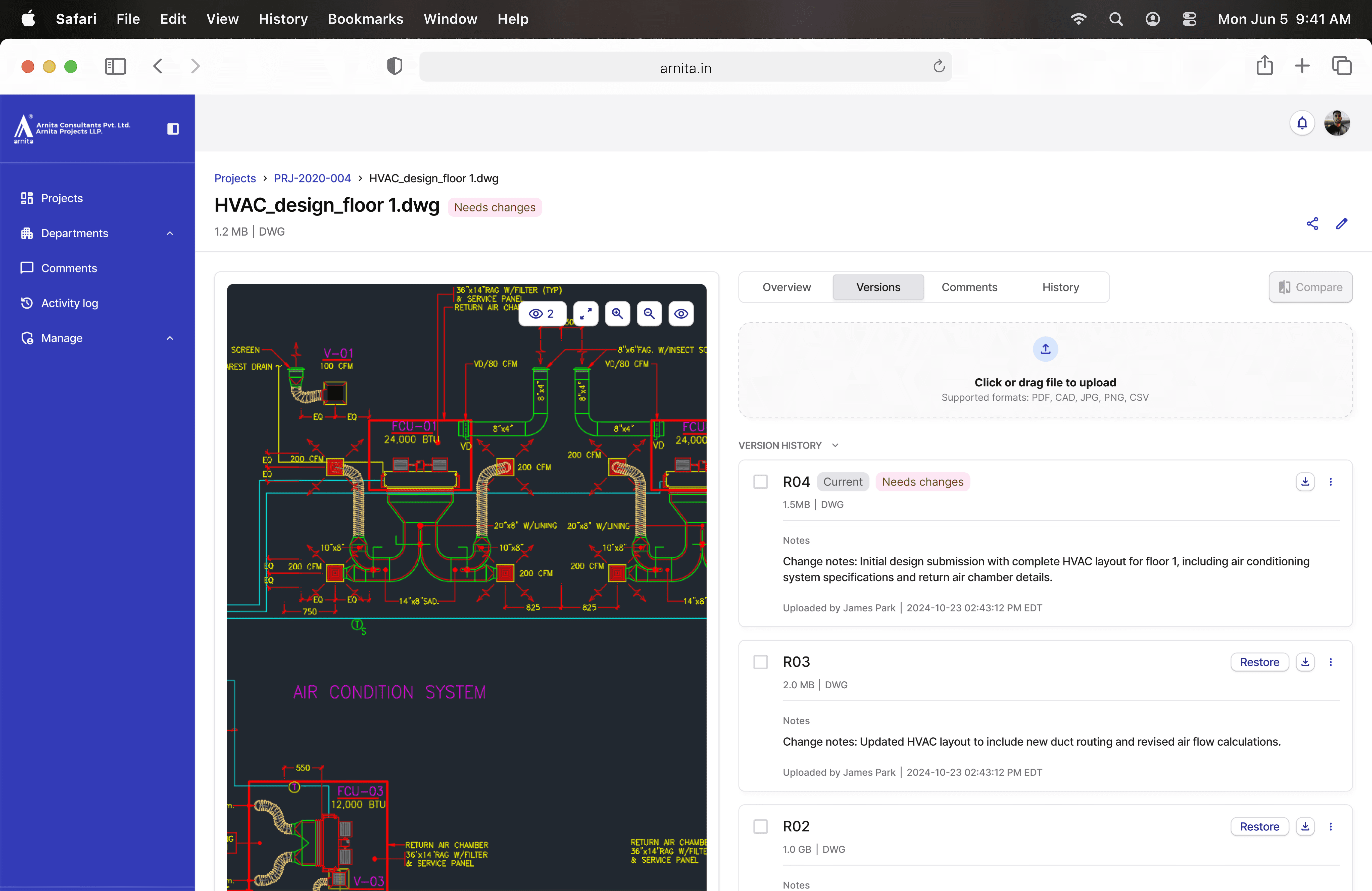
A single review system that tells every team member what's latest, who owns it, and what's been decided, without opening an email.
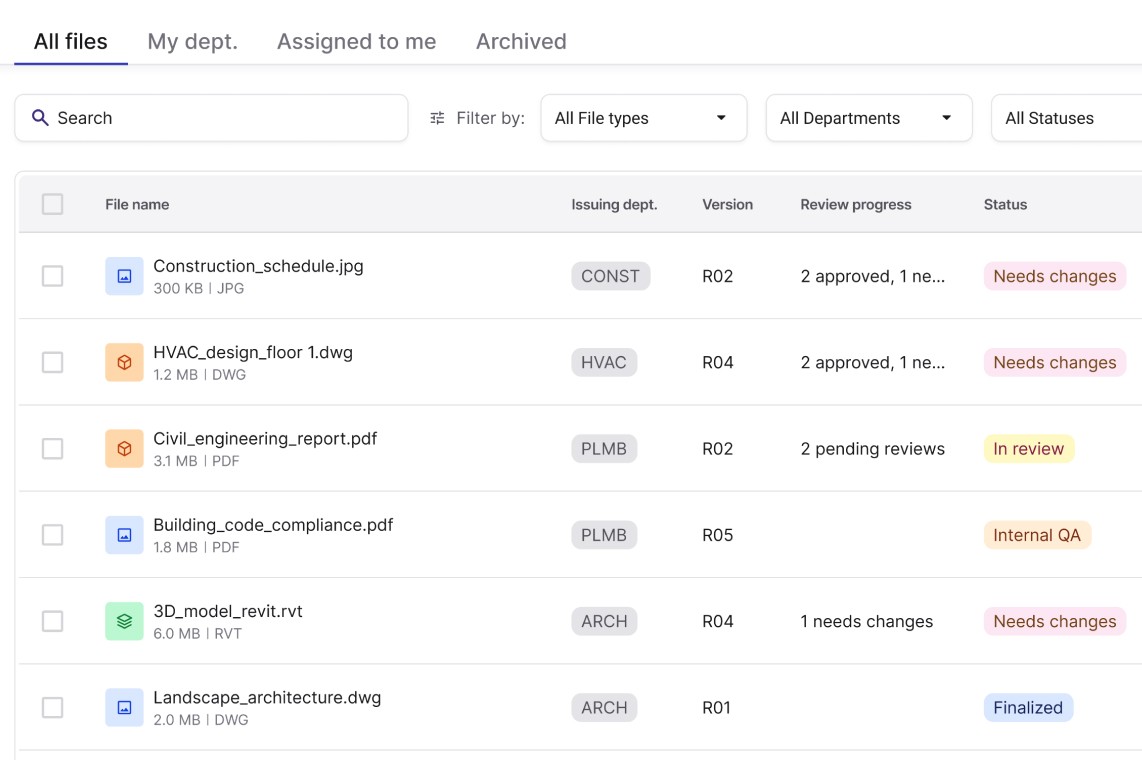
I built a three-layer coordination system, project browsing, file tables, and detail pages, that translated email-based workflows into structured review states with clear ownership, so teams could move reviews forward predictably.
Review visibility
See review state, ownership, and blockers, without opening a single email thread.
Version confidence
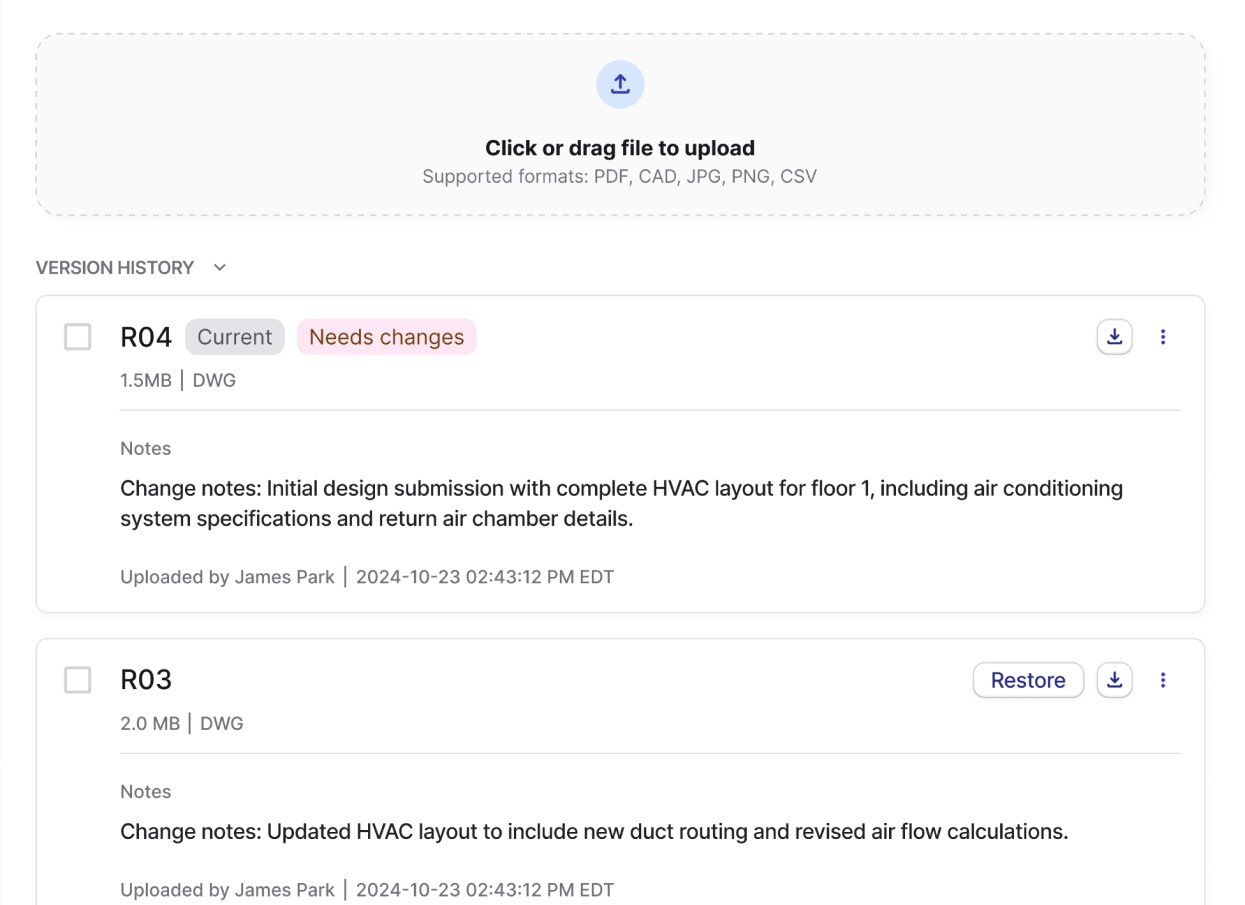
One current version across all departments. Auto-versioned on upload, with change notes required.
Traceable decisions
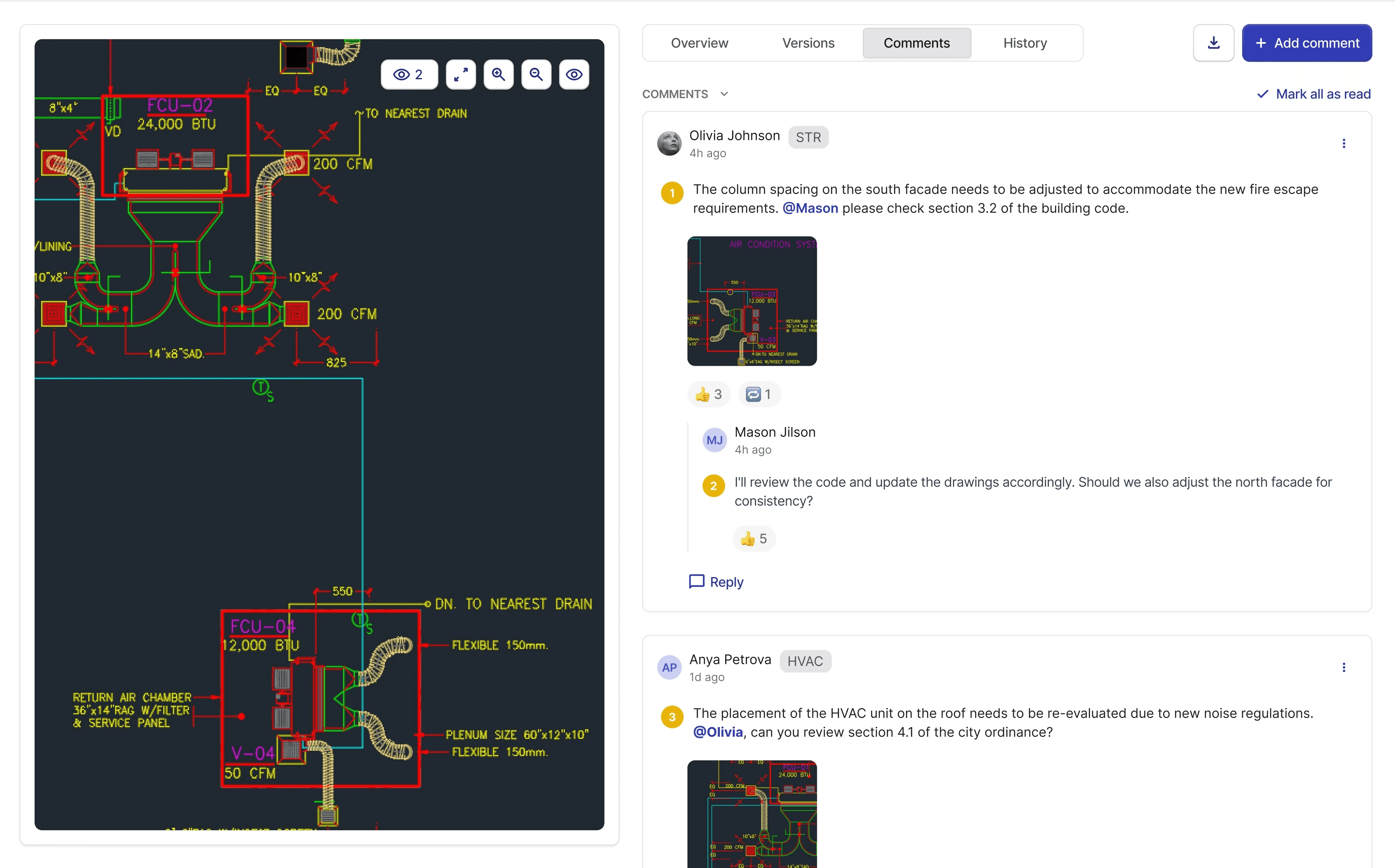
Every comment pinned to the version it was made on. Feedback stays in the system, not in a separate email thread.
Impact
The system shipped. Review tracking moved from email threads to a single source of truth.
I built a three-layer coordination system: project browsing, file tables with status tracking, and detailed file pages showing ownership, review state, and version history. Architecture, Structural, Electrical, and Civil departments adopted within 2 weeks.
arrow_downward
4/6 departments
Adopted the system within the first month of launch.
arrow_downward
70%
Less time spent locating files and chasing uploaders. Per person, per week.
arrow_downward
22 -> 2
Duplicate files per 100 drawings after automatic versioning shipped.
arrow_upward
60%
Faster review cycles from submission to sign-off, post-launch.
So, what made this
problem different?
Procore and BIM 360 didn't fit, enterprise licensing was too costly for an internal-only team, and neither supported the multi-department, sequential sign-off workflow. Building custom was a strategic decision, not a fallback.
Research
Mapping the problem: where drawings moved, who touched them, and where they stalled
I used three methods to build this workflow map and validate the coordination breakdown across all six departments. Workflow mapping showed the process. Interviews validated the pain. Observation quantified the cost.
Workflow mapping
Traced one project end-to-end through all 6 departments
Goal: Map the complete review workflow to identify where handoffs happened and where coordination stalled.
Stakeholder interviews
12 interviews across 6 departments revealed the same friction
Goal: Validate the mapped workflow and understand department-specific pain points and needs.
Shadow sessions
Observed engineers search for files to quantify the coordination cost
Goal: Watch the actual search-and-verify workflow in real time to measure time spent and identify friction points.
Key insights
These insights led to brainstorming on features, clustered into 3 groups: Review visibility, Version confidence, and Traceable decisions.
Research revealed a pattern: review coordination failed at every handoff because status, ownership, and version history were invisible to the system. Twelve interviews across six departments. The friction wasn't the same for everyone.
search
Every review started with a time consuming search
No system-level visibility into "what needs my review." They searched folders and emails to find files waiting for them.
compare_arrows
Changes required manual comparison across drawings
They toggled between versions and department layers to spot differences. Change context lived in scattered emails, not in the system.
label_important
Status existed only in people's heads
"Is this approved?" had no system answer. Employees cross-referenced 5-6 folder levels and email threads to reconstruct review state.
content_copy
No version control, just duplicates
22 duplicate files per 100 drawings with names like "final_final_v3." No way to identify the current version without opening each file.
Design strategy
The constraint wasn't just time. It was deciding what the system had to get right first.
I ran prioritization sessions with each lead using their folder structures and email chains as evidence. We deferred integrations and advanced tooling that increased engineering risk or required major process changes.
Review Visibility
Central dashboard
Search and navigation
Review status states
Activity log
Multi-reviewer routing
External BIM 360 / Procore sync
Version Confidence
Automatic versioning
Version history
Upload new version and change notes
Assigned reviewer/owner
Restore prior version
Automated clash-detection alerts
Traceable Decisions
Compare versions
Threaded comments
Decision capture
Real-time collaborative markup
E-signature stamp
Must have (Phase 1)
Won't have (Defer)
view_timeline
Core visibility before advanced automation
Why: Can't automate coordination if basic visibility doesn't exist.
The trade off: Some manual handoffs remained, but adoption was immediate.
foundation
Standalone system, defer integrations
Why: Integrations meant engineering dependencies and month-long timelines.
The trade off: Getting departments use the system quickly was more valuable than tool interoperability.
schedule
Async traceable decisions, not real-time
Why: Persistent comments solved the problem without forcing synchronous work.
The trade off: No live markup sessions, but comments worked, lower adoption friction.
Final solution
A file-first system that answers: What's in review. What's current. What is the feedback.
Feature 1: Review Visibility
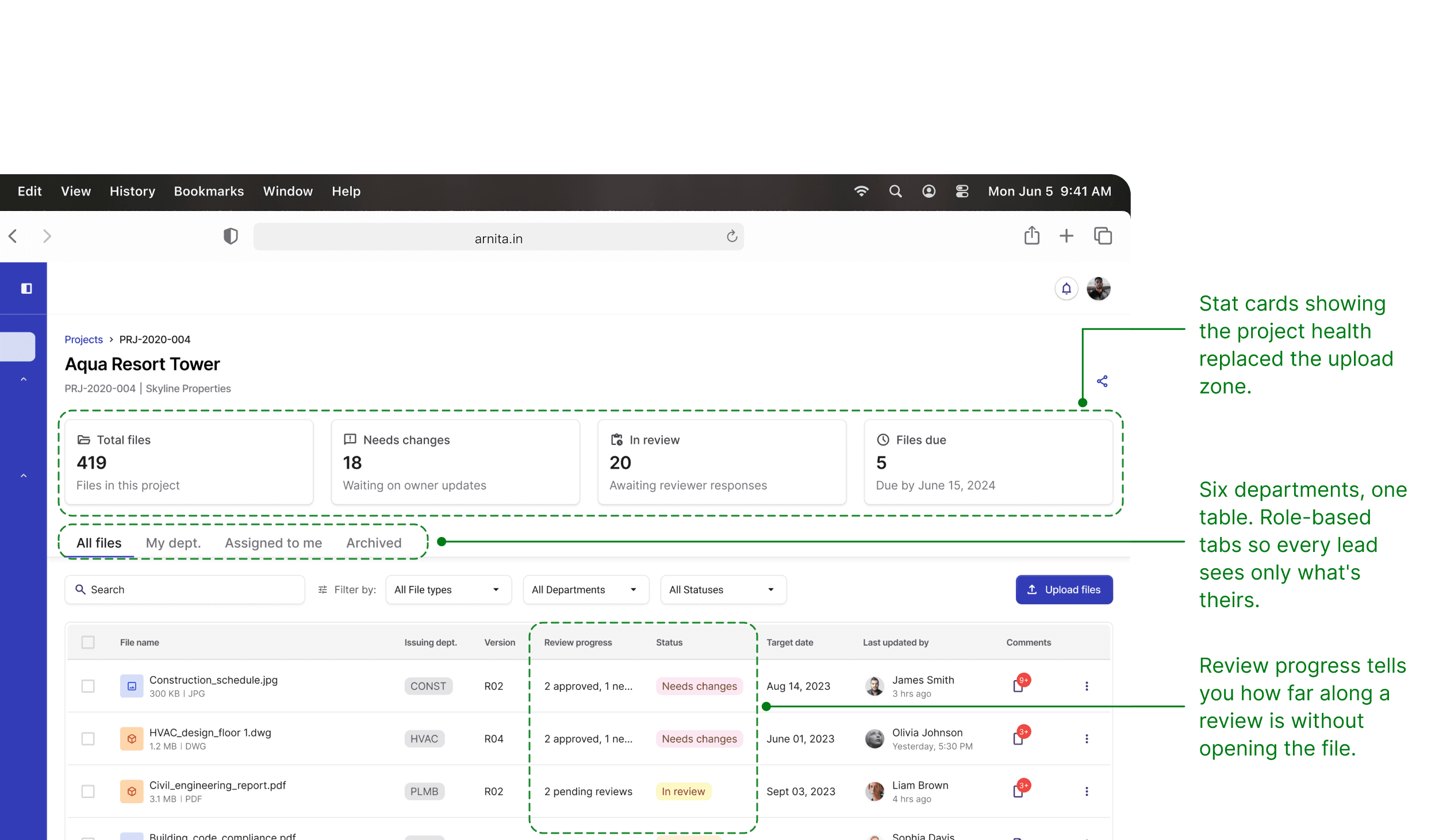
A cross-department entry point that surfaces project status, workload, and deadlines, with a predictable drill-down from project → file → version.
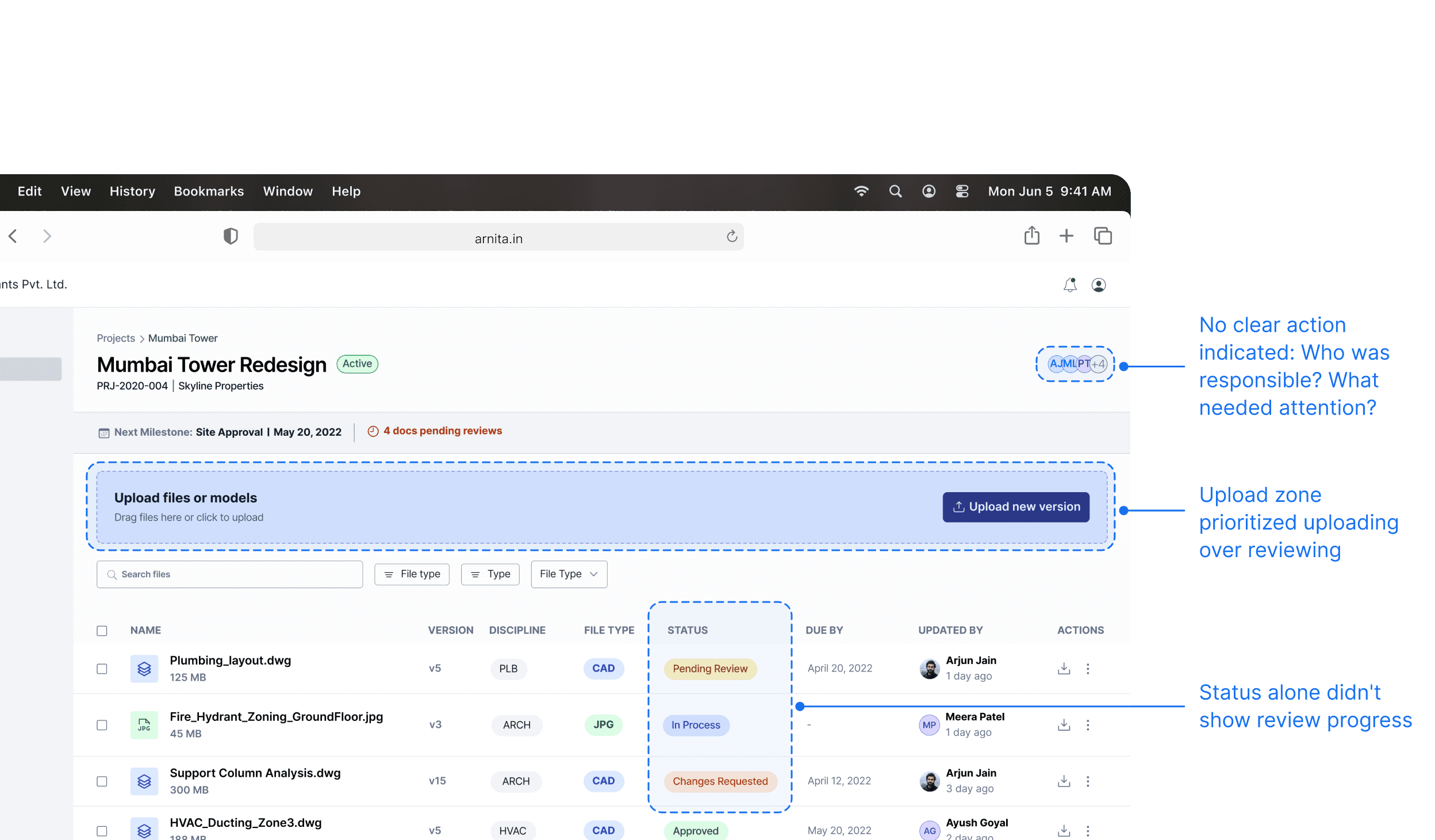
Initial iteration
After testing with department leads
The first version prioritized uploading. The final prioritized reviewing. That one shift changed the entire information hierarchy.
Feature 2: Version Confidence
Versioning is auto-generated on upload, removing the human decision of "what do I name this?" Change notes are required, so context travels with the file, not in a separate email thread.
Feature 3: Traceable Decisions
The compare view keeps everything in one place. Comments are pinned to the version they were made on, so when R05 is uploaded, feedback from R03 stays exactly where it belongs.
Comment directly in the review flow
Comments thread directly on drawings. Ownership is clear, follow-ups stay in the system.
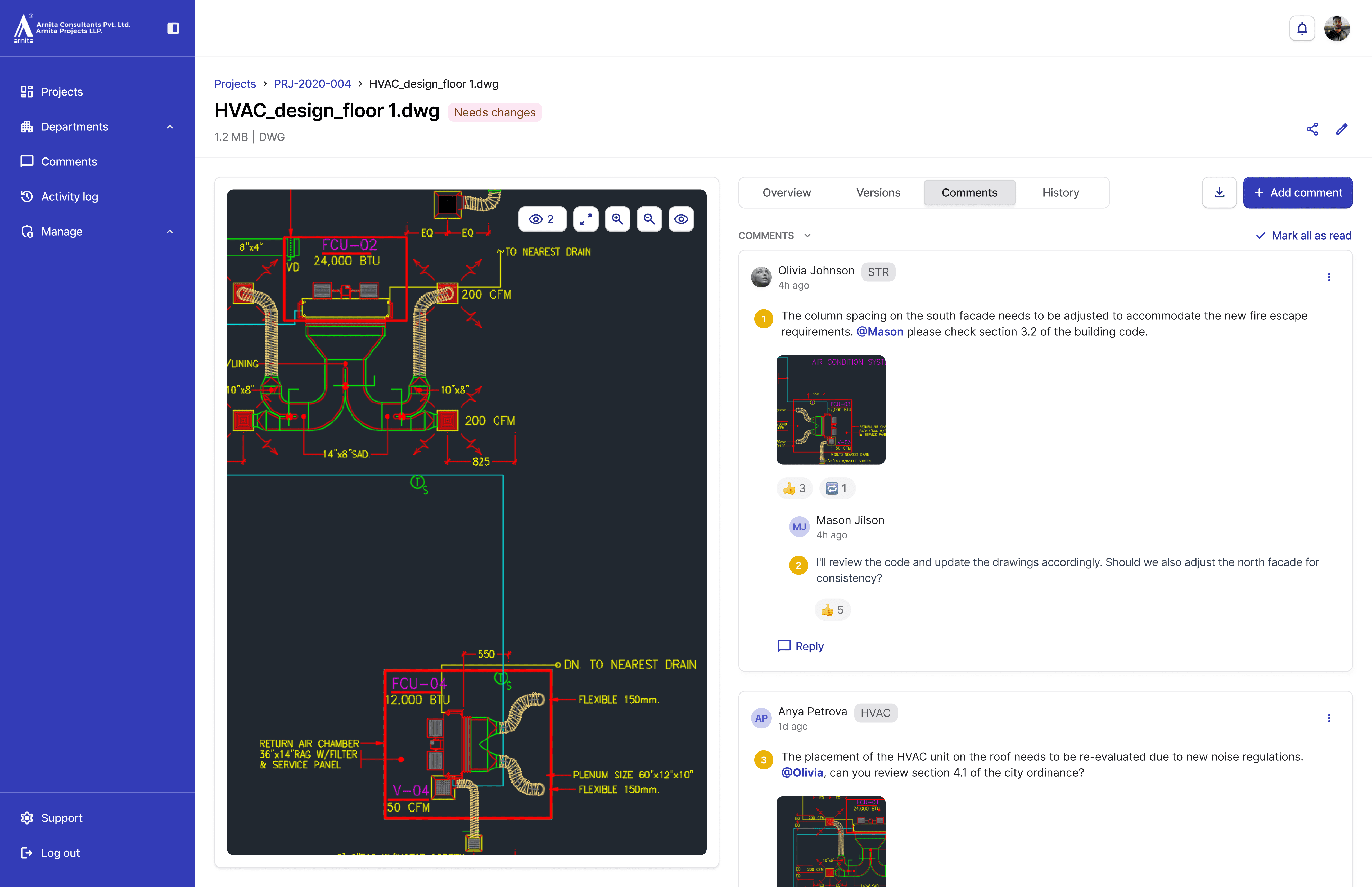
Feedback attached to the right version
When a new revision uploads, prior feedback stays visible on the revision it belongs to.
Learnings
Three things this project taught me about 0→1 design.
Handshake
In a non-product company, trust is the real design problem.
Teams had years of muscle memory around email and folders. Showing people their own pain, before proposing a solution, mattered more than any feature decision.
fact_check
Sole designers need a decision log, not just a handoff doc.
After six weeks, I couldn't always recall why certain trade-offs were made. A running decision log would have made stakeholder reviews and the handoff sharper.
auto_awesome
Test the edges earlier.
I didn't test the compare view with HVAC before launch. I knew the zoom constraint existed: I'd flagged it, but I didn't push to validate it early enough. It cost us a hard launch week and real friction with two departments.
Next time: test the edges with the people most likely to reject them, not just the early adopters.